

Renovation rubbish removal in Davidson
A renovation makes rubbish three times: the rooms have to be emptied before the trades start, the old fittings come out while they work, and the leftovers are there at handover. We come for each one, on a day that suits the trades' programme.
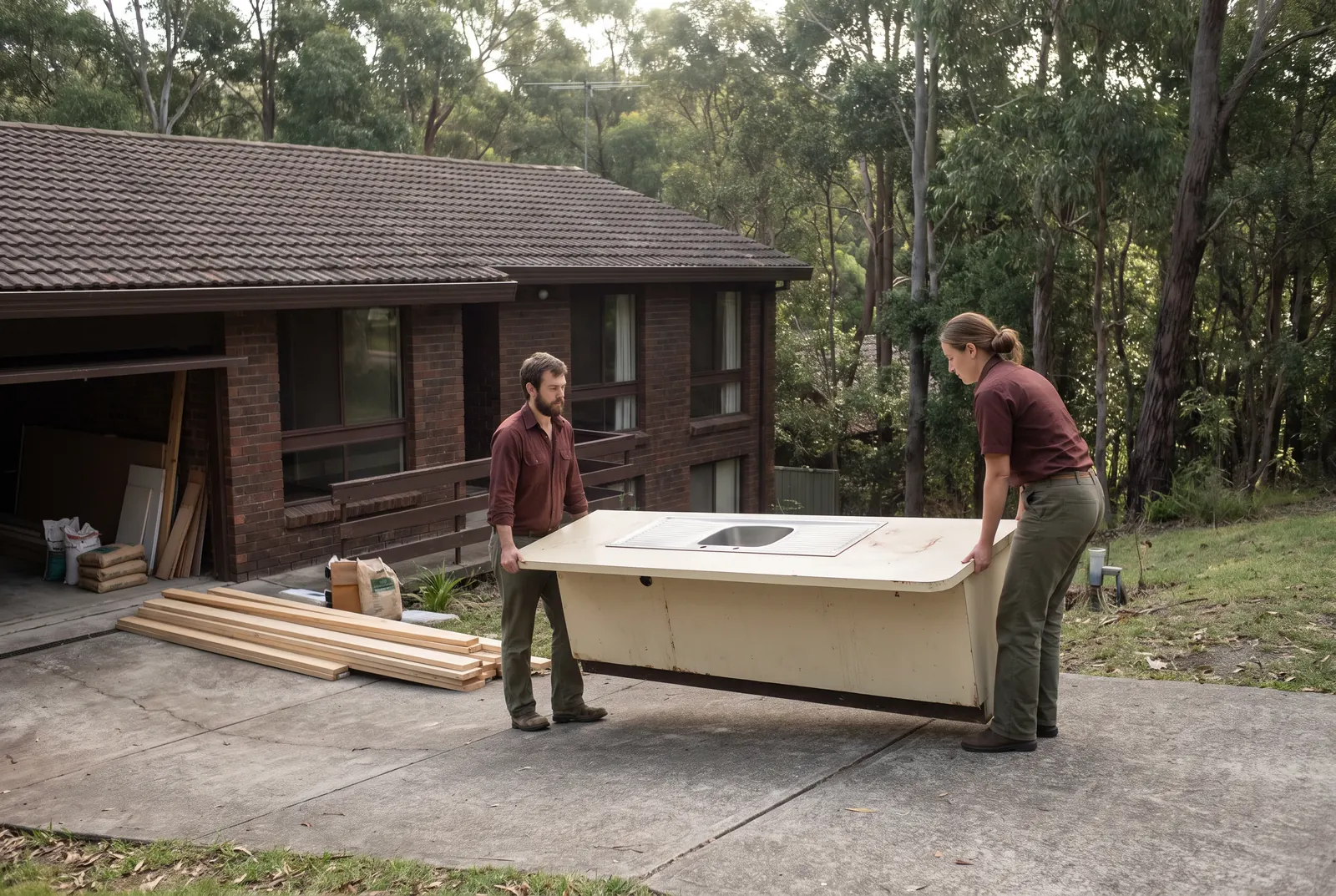
- Before the trades1Empty the roomsWhat isn't staying goes.
- DuringTrades on site2Take what comes outKitchen, bathroom, floors, deck.
- After handover3Clear the leftoversOffcuts, packaging, the retired pieces.
Empty the rooms before the start date
The trades want to walk into a room with nothing in it. Every hour they spend moving a bookcase or waiting for a wardrobe to go is an hour on your bill, so the first load goes before they arrive.
You tell us which rooms are being worked on and what is staying. We take the rest: the furniture the new room won't have, the cupboard contents you've decided against moving twice, the old fridge the new kitchen replaces. Then we sweep the floor so the first trade in can set out.
- Beds, lounges, wardrobes and bookcases you're done with
- Boxed contents from cupboards, the pantry and the linen press
- Rugs, blinds and curtains coming down
- Whitegoods being replaced
It works the same when a room is changing jobs rather than being rebuilt: a child's room becoming a study, or a spare room cleared for the painter. Emptying a room before the trades start
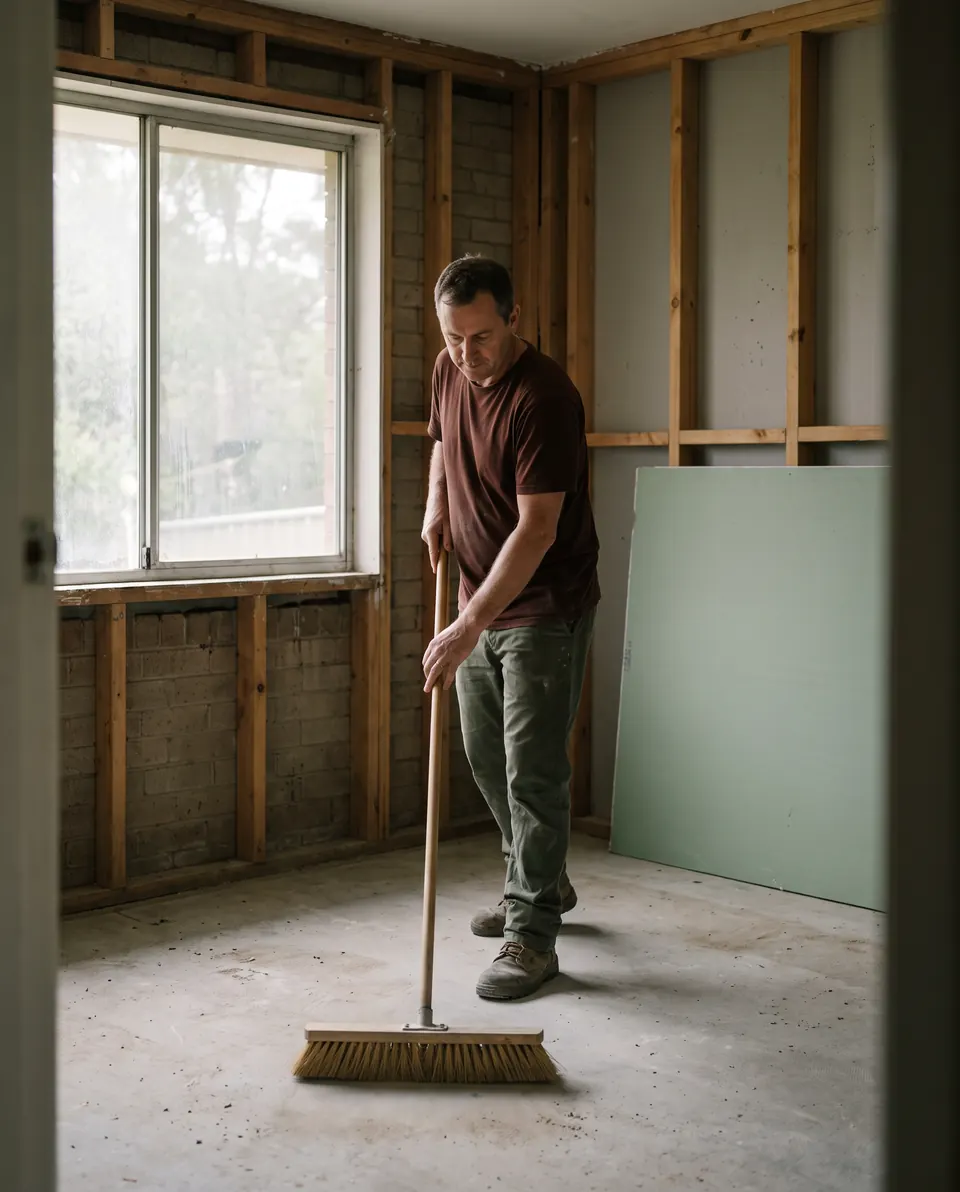
Take what comes out, as it comes out
When the installer or builder pulls out the old kitchen or bathroom, it has to go somewhere. Usually that's the garage or the carport, and it sits there until someone deals with it. We book this load around the day it comes out, so it doesn't sit long.
We take what's been pulled out. Whether we pull it out as well depends on the job, so ask us.
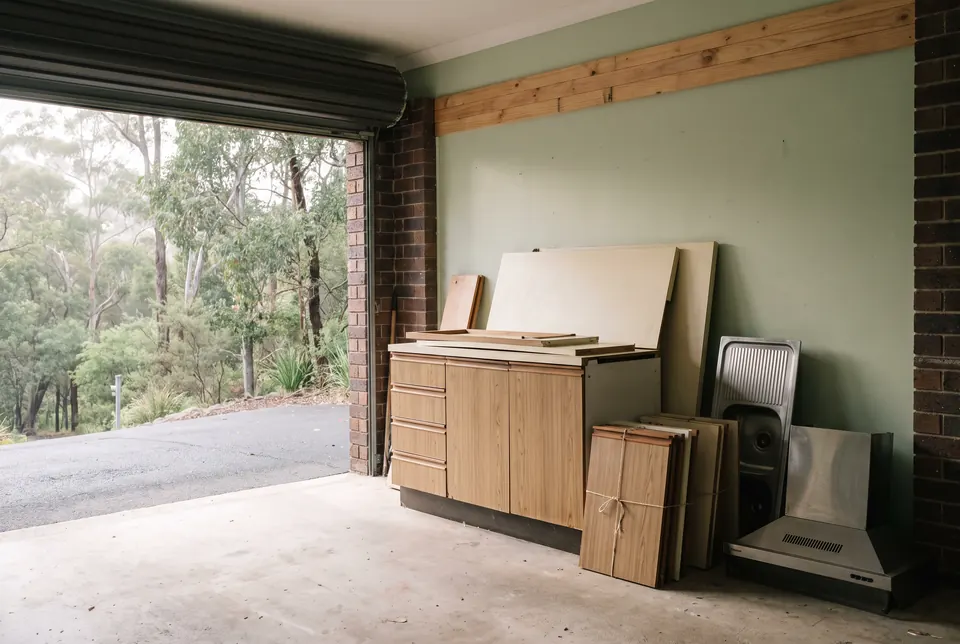
What comes out, room by room
Kitchen
- Base and wall cabinets, doors and drawers
- Benchtops, the sink and the tap set
- Rangehood, oven and cooktop
- The old dishwasher and fridge
Bathroom and laundry
- Vanity and mirror cabinet
- Toilet, basin and bath
- Shower screen and frames
- Tubs and laundry cabinets
Floors
- Carpet and underlay
- Floating floorboards and their foam
- Skirting and trims
- Timber flooring that has come up
Deck and pergola
- Old deck boards
- Joists and bearers
- Pergola posts and beams
- Screening and lattice
Why not the council cleanup? Northern Beaches Council's bulky goods collection doesn't take building material, and takes only one built-in item, like a single cabinet or sink. A whole kitchen or bathroom needs another way to go.

The NSW EPA treats a house built before 1990 as likely to hold some asbestos, and a renovation is what disturbs it. The usual places are eaves linings, the wall sheeting behind old wet-area tiles, and old vinyl or lino with its backing. Have those tested before the work starts.
We don't remove asbestos. More than 10 square metres of bonded asbestos, or any friable asbestos, must be removed by a licensed asbestos contractor, and asbestos.nsw.gov.au explains how to find one. We book our loads around their visit. What to test, and who does what
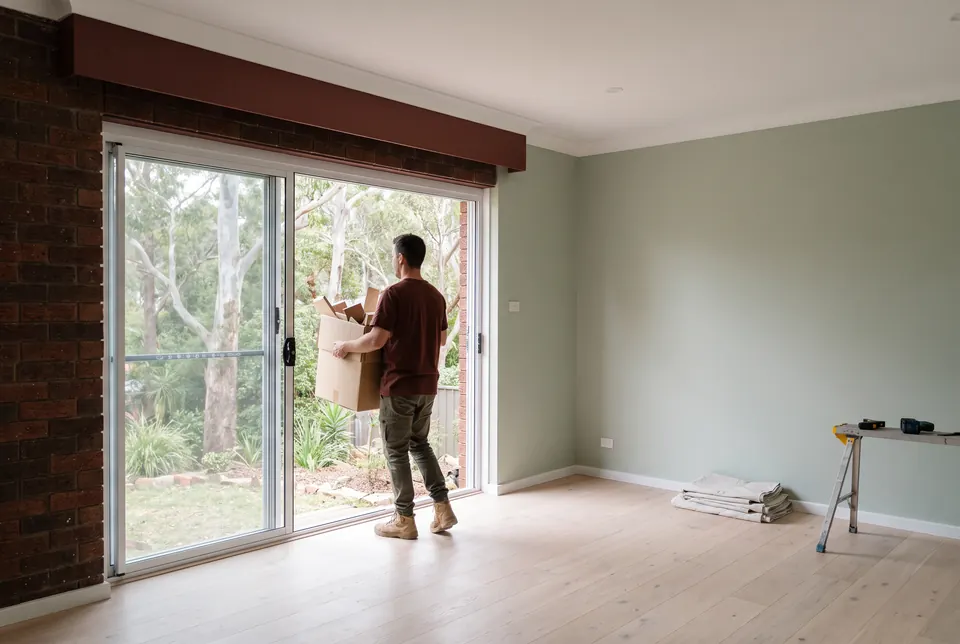
Clear the leftovers after handover
Handover rarely means empty. There are offcuts the trades didn't take, the boxes the new appliances came in, flat-pack cardboard, and usually a few pieces of old furniture that don't suit the new room after all.
- Offcuts, trims, tile boxes and part sheets
- Packaging, pallets and cardboard
- The furniture and fittings the new room has retired
- Anything else in the house you want gone on the same trip
If you're living in the house through the work, this is often where the garage finally gets its turn. Living in the house while it's renovated
How the price works
We look at each load and give you one fixed price before anything is lifted. There's no hourly rate running while we carry things up a sloping drive, and no tip fees added afterwards. If you add something on the day, we agree the change before we load it.
You can price all three loads at the first visit, or one at a time as the job moves.
What changes the price
- Volume
- How much of the truck the load takes up.
- What it is
- Heavy material and whitegoods cost more to dispose of than furniture.
- Access
- Steep drives, stairs and an under-house garage all take longer to carry from.
- Loads
- Three separate visits, or fewer if the job allows.
A skip, a crew, or both
A builder's skip is good for the steady waste of the build. A crew is better for whole items, whitegoods, furniture and anything that shouldn't be broken up to fit. On plenty of jobs there's room for both.
On a short cul-de-sac with the trades' vans in the drive, there often isn't room for a skip at all. One on the road needs a Northern Beaches Council permit, lodged at least two working days ahead, with a 1.5 metre path kept clear. A crew loads straight from the house and leaves nothing on the kerb.
What we don't take
- Asbestos, or sheeting that hasn't been tested
- Liquid paint, chemicals and gas cylinders
- Medical and clinical waste
We'll tell you where those can go instead.
Questions about renovation clearing
Do you pull out the old kitchen, or only take it away?
We take what's been pulled out. Whether we pull it out as well depends on the job and what's behind it, so ask us when you enquire. Anything that touches old wall sheeting waits until that sheeting has been tested.
Can you work around our installer's dates?
That's how we book. Give us the trades' start date and the day the old kitchen or bathroom comes out, and we'll plan the loads around them. If a date moves, tell us and we'll move with it.
We're living in the house during the work. Does that change anything?
Only the order. We clear room by room so the family always has somewhere to be, and we keep a path to the kitchen or bathroom that's still working. More on living through a renovation
Is it always three separate loads?
No. A single bathroom can often go in one load after handover. A whole level usually needs all three. The planner shows which loads your job still has ahead of it.
Do you take tiles and rubble?
Tiles, small amounts of rubble and broken-up concrete, yes, priced by weight as well as volume. Old wall sheeting behind wet-area tiles gets tested first.
Does someone need to be home?
It helps if someone can show us the load when we look at it and agree the price. For the load itself, tell us how to get to it and we'll work from that.
Read before the trades start
- Old eaves sheeting or vinyl underlay? Get it tested first.Where asbestos hides in a pre-1990 house, and who removes it.Guide
- Emptying a room before the trades startWhat goes, what stays, and what we need from you.Guide
- Old kitchen and bathroom removalEverything a strip-out leaves behind, and where it goes.Service
Tell us about the job
A few lines is plenty. We ring you back, come and look at it, and agree one fixed price before anything is lifted.

No hourly rate, no tip fees on top. The price covers loading, sweeping up and taking it to a licensed facility. If the job changes on the day, we agree the change before we carry on.