

Living in the house while it's renovated
Most houses in Davidson are lived in by the people who own them, and plenty of families stay put through the kitchen or the bathroom rather than rent somewhere for the months it takes. That works when the clearing goes room by room, so there's always a working bathroom, somewhere to cook and a clear way through.
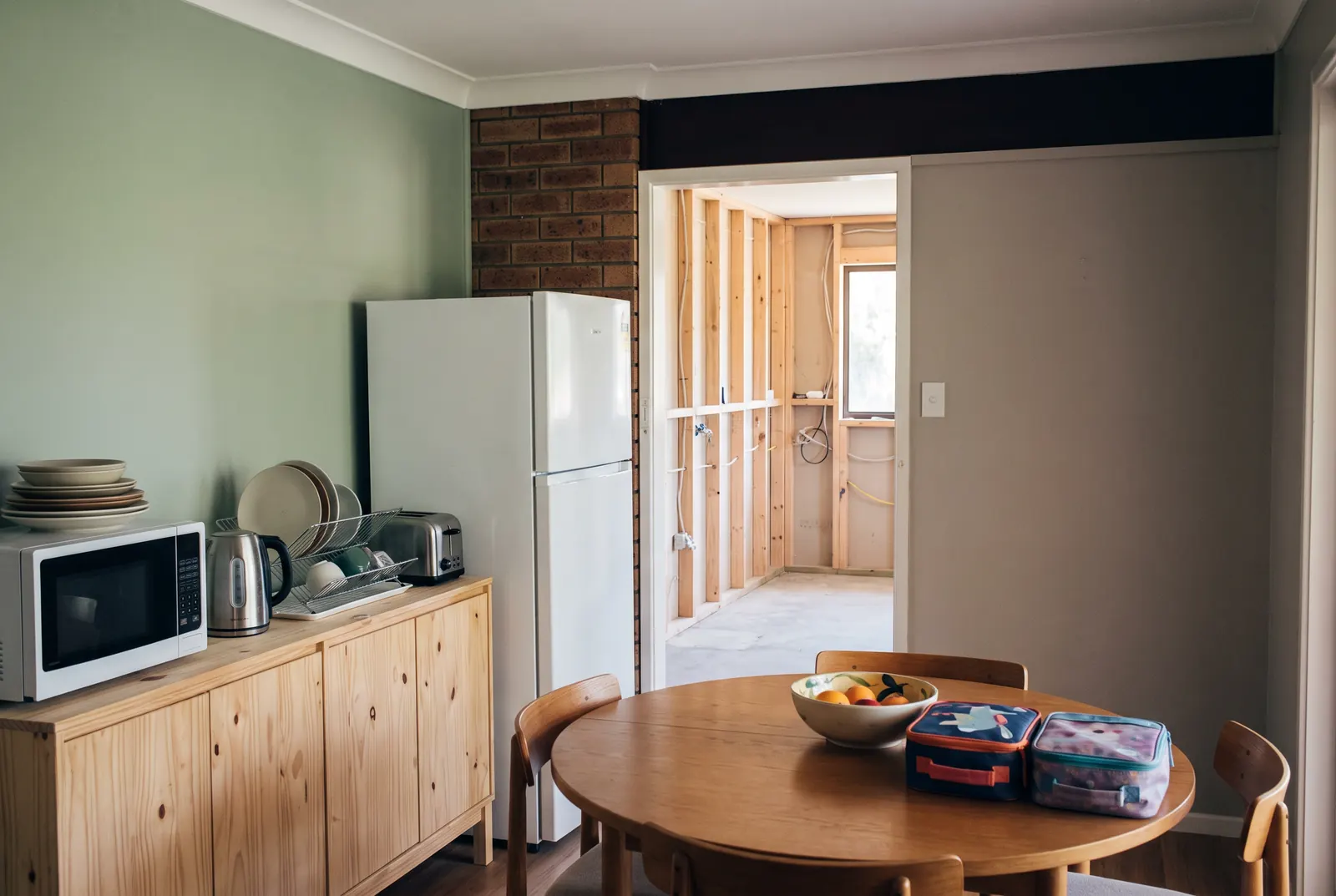
- Before the trades1
- DuringTrades on site2
- After handover3
Mostly the middle load, while the trades are working around you. All three loads
Keep one of everything working
Before any room is cleared, decide which rooms the family will live in while the work goes on. The trades need their room empty, and you need a kitchen of sorts, a bathroom, beds and a way to reach them. Each load we take is booked so none of those is ever blocked.
Tell us at the first look which rooms are staying in use. We don't carry through them, and we don't stack anything in them, even for an hour.
- Somewhere to cook
- A stand-in kitchen in the dining or family room: the fridge, a microwave, a kettle, and the laundry tub for the washing up.
- Somewhere to wash
- One bathroom or toilet that works every day. If the house has only one, ask your builder which days it's out.
- Somewhere to sleep
- Bedrooms stay out of the work, and out of the storage.
- A way through
- A clear path from the front door to all of the above that never crosses the work zone or the stack.
Your way through the house, and ours
Here's a common one: the kitchen is being redone and a family of four is living in. The dining room becomes the kitchen for a while. The family comes and goes through the front door and the hall. The old kitchen goes out the side door to the carport, where it waits for us.
The two routes don't meet. We agree ours at the first look, before any price is set, and it stays the same for every load.
On a split-level house
Plenty of Davidson houses step down a sloping block, with the garage underneath. The under-house garage is often the natural place for old fittings to wait, because it's out of the living areas. The carry up to the truck is longer from there, so it's part of what we look at when we agree the price.
- The family's way through
- Our carry route
- The room being redone
- The stand-in kitchen
- Where the old kitchen waits
The three loads, with the family at home
The loads are the same as any renovation. What changes is the order inside each one, and how small the middle one gets when there's nowhere spare to stack.
-
1 Before the trades
Set up the rooms you'll live in
First the stand-in kitchen gets its space, then the room being redone is emptied. Whatever isn't moving into a room that stays in use, and isn't coming back, goes on this load.
- The dining room cleared enough for a fridge and a bench
- Furniture from the work room that won't return
- Boxes you've decided not to store for months
-
2 During
Smaller loads, more often
In an empty house the old kitchen can sit in the garage for a week. With the family's car, bikes and stored furniture in there too, it can't. So the middle load often splits: the cabinets and benchtop the day they come out, the tiles and flooring when those come up.
- Each load priced on its own, before we lift anything
- Carried along the route we agreed, never down the hall
- The stack spot swept each time, so it's clear for the next lot
-
3 After handover
Clear the stand-in rooms
Once the new kitchen works, the stand-in one has to go. That's usually the old fridge that kept going in the dining room, a spare microwave, and whatever filled the room you stored things in.
- The old fridge and small appliances
- Packaging from the new appliances
- What you stored and decided against keeping
Where the old fittings wait
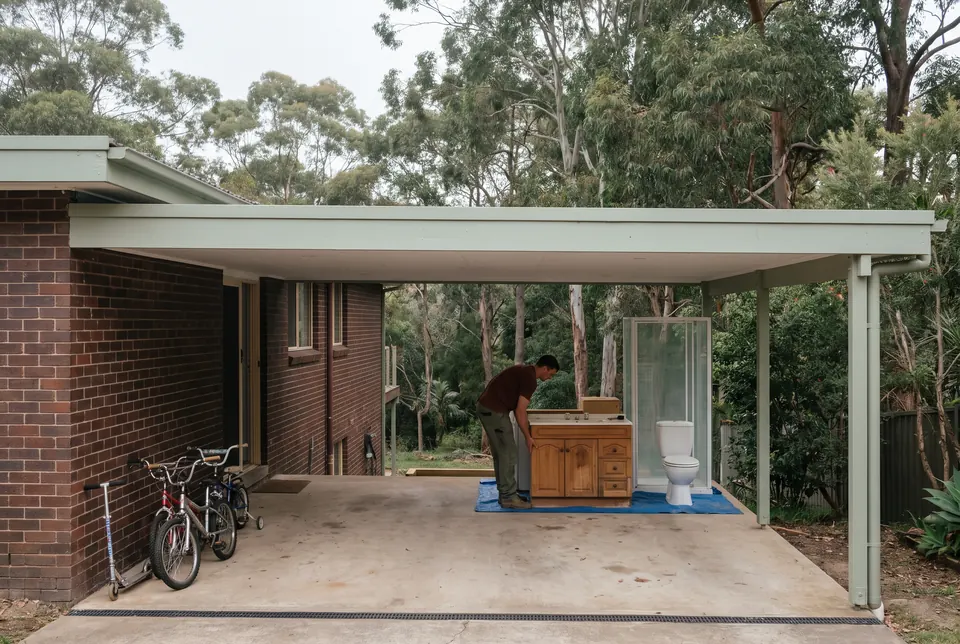
Between the day the installer pulls the old vanity out and the day we take it, it has to sit somewhere. Pick the spot before the work starts, and tell the trades too, so the first thing out doesn't end up in the hall.
A good stack spot is under cover, off the family's path, out of the kids' reach, and close to where the truck can stand. Old fittings come out with screws, broken tile edges and glass, so it's no place for bikes or a cubby.
Stack spots compared
Under-house garage
Suits A split-level with a garage floor you can give up for a few weeks.
Watch for It fills with stored furniture fast. Leave a clear corner by the door for the fittings.
Carport
Suits Most jobs. It's covered and close to the truck, and nobody has to walk through it to get inside.
Watch for The car lives on the street for a while. Keep a gap between the stack and anything the kids use.
Side path
Suits A small bathroom job where the fittings go straight out a side door.
Watch for It's often the only way to the bins and the back door. A stack there blocks both.
The driveway
Suits A single day, when everything comes out and goes the same afternoon.
Watch for The trades park there, and on a short street their vans have nowhere else to go.
Not the footpath. A pile on the kerb isn't a collection. Northern Beaches Council's bulky goods pickup won't take building material, so a kitchen or a bathroom left out the front stays there. Skip or a crew on a Davidson street
What goes wrong when you're living in, and how to avoid it
- Something you were keeping goes with the load
- When one room's contents move into another, the keep pile and the rubbish pile end up side by side. We load only what you've pointed to. Store the things you're keeping behind a closed door, or cover them, and it can't happen.
- The stack takes over the carport or garage
- The old kitchen waits for a builder's skip that's already full, and the car stays on the street for a month. Book the middle load for the day the fittings come out, not "when it's all done".
- The trades spend their first morning moving your things
- You pay for that morning. The work room is empty and swept before the start date, and the stand-in rooms are set up before it's emptied.
- The only bathroom goes out with no plan
- That's a question for your builder, not for us. What we can do is take the old one the day it comes out, so the new one goes in on a clear floor.
- The family ends up living next to the dust
- Close the door on the work room, keep the stand-in kitchen at the far end of the house if you can, and keep the carry route outside. Nothing is carried through a room you're living in.

Houses from before 1990 often contain asbestos, which is why the NSW EPA tells owners to check before they renovate. Sample the eaves, any sheeting under the old tiles and any vinyl backing while the walls are still closed, not after the family has spent a week beside opened ones.
That work isn't ours. In NSW a licensed contractor removes friable asbestos of any size, and bonded asbestos once it covers more than 10 square metres. asbestos.nsw.gov.au is the place to start looking for one, and we come for our loads once they've finished. What to have tested
Questions from families staying in
Can the load happen while the kids are at school?
Tell us which part of the day the house is quietest, or when a baby is asleep, and we'll try to book the load for then. We'll say at booking if we can't.
Will the crew walk through the house?
Only where you've said we can. We carry from the stack spot where possible. When a room has to be emptied from inside, we agree the route with you first and keep to it.
We're using the old fridge in the dining room. When does it go?
Keep it running until the new kitchen is working, then it goes with the after-handover load. Empty it and turn it off the night before, so it's dry when we lift it.
Do smaller, more frequent loads cost more?
Each load gets its own fixed price, agreed before we lift anything, and the price follows what's in it and how far we carry it. You can have us price the whole job at the first look and decide how to split it from there.
Can you take the things we stored during the work?
Yes. The room or garage you stored things in is often the last thing sorted. Whatever isn't going back into the house joins the leftovers on that load.
Do we need to be home?
With a family living in, usually someone is. If not, show us the stack spot and the route once, and we'll work from that on later visits.
Read next
- Emptying a room before the trades startThe first load, room by room, and what to leave behind.Guide
- Plan your loadsThree questions, and the loads your renovation still has ahead of it.Planner
- Skip or a crew on a Davidson streetRoad permits, a tight cul-de-sac, and jobs that use both.Guide
- Old kitchen and bathroom removalCabinets, vanities, tiles and appliances, sorted by where they end up.Service
Tell us about the job
A few lines is plenty. We ring you back, come and look at it, and agree one fixed price before anything is lifted.

No hourly rate, no tip fees on top. The price covers loading, sweeping up and taking it to a licensed facility. If the job changes on the day, we agree the change before we carry on.