

Before anyone starts
In the first weeks, the most useful thing a family can do is very little. Leave the house much as it is. A few early decisions make everything after them easier, and a few early clear-outs are hard to undo.
Worth doing now
- Agree who makes the calls. One person, chosen by the family, talks to us, the agent and the executor.
- Find the will and the papers the executor will ask for before anything is moved.
- Ask each family member to name what they'd like, even if nobody can collect it yet.
- Keep the power and water on until the house is empty.
- Collect or redirect the mail so nothing piles up at the door.
Worth leaving for now
- Filling the wheelie bins each week from drawers nobody has looked through
- Giving things to neighbours and friends before the family has had its say
- Booking the council pickup for furniture someone may still want
- Pulling down an old shed or lining before it's been tested
The first look
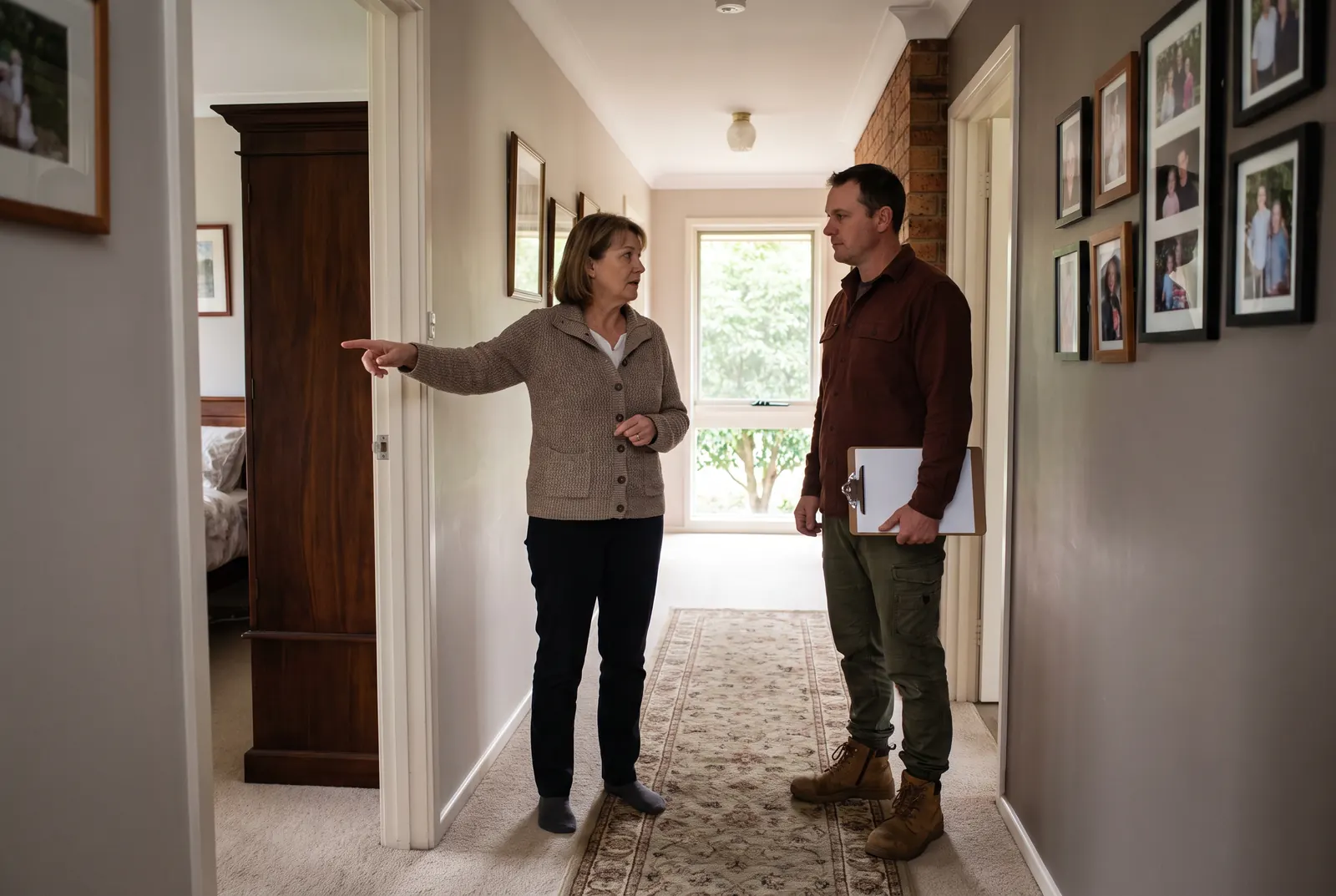
We walk through the house with the person making the calls, or with someone they send. Nobody is hurried through it, and nothing leaves the house that day.
What we look at
- Every room, cupboard and built-in wardrobe
- The roof space and what's stored under the house
- The shed, the garden and anything along the side paths
- The carry: stairs between levels, the slope of the drive, where a truck can stand
What we ask you
- What stays with the house, for the sale or for a tenant
- What's already promised to family
- The dates that matter: the move into care, the agent's photographs, settlement
- Who holds the keys, and who gets the quote
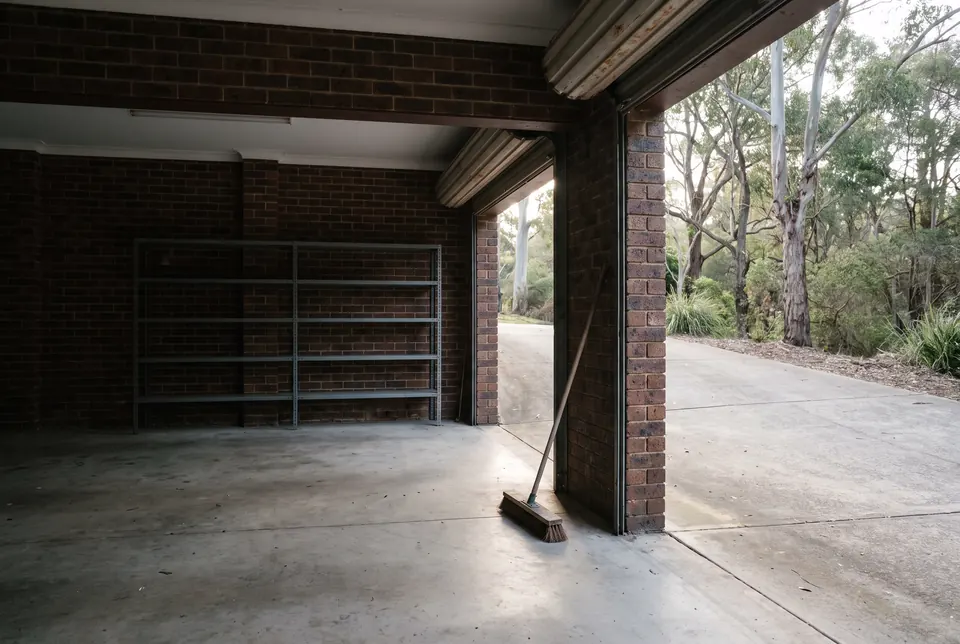
Most Davidson houses sit above or below the street, and plenty of streets end in a turning circle. At the first look we work out whether the front steps or the under-house garage is the easier way out, and where the truck can stand without blocking a neighbour's drive.
Afterwards we send a single fixed price for the whole house, with a plan of visits in the order you've chosen. If the executor or the estate's solicitor needs a copy, we send it to them too. What the price covers
Setting aside what matters
Before the first load goes, one room becomes the set-aside room, usually a spare bedroom with the door kept shut. Everything the family wants goes in there, and so does everything nobody has decided about yet. Nothing comes out of that room unless the person making the calls says so.
While we clear, we open what we carry. In a house one family has lived in since it was built, things end up in places nobody would think to look.
Where things turn up
- Between the pages of books, cookbooks and the recipe folder
- Taped under drawers or beneath the drawer lining paper
- Wrapped in the freezer, or in tins at the back of the pantry
- In coat and handbag pockets in the hall cupboard
- In biscuit tins and jars on the garage shelves
- Up in the roof space, just inside the manhole
- Under the mattress and at the back of the bedside drawers
- In envelopes tucked behind framed pictures
Anything we can't place goes into the set-aside room. We would rather you throw it out later than have it lost now.
Sorting for family, charity and disposal
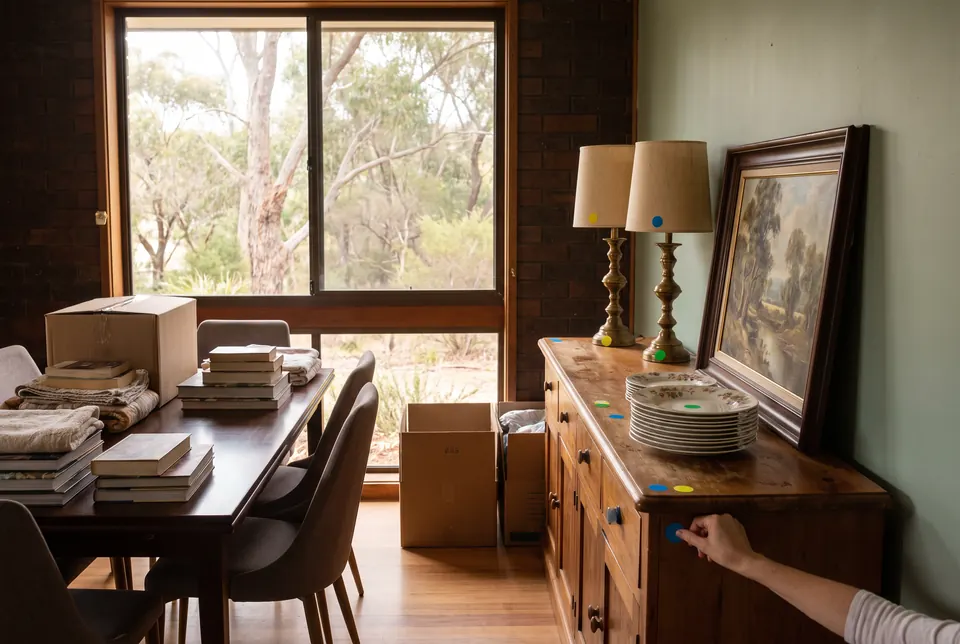
Once the set-aside room is settled, the family has a round of its own. A simple way to run it: each person gets a colour of sticker and marks what they'd like. Anyone who lives away gets photographs and a date to answer by.
If two people want the same thing, it goes into the set-aside room until the person making the calls decides. We only clear what carries no sticker.
After the family's round: where things usually go
| What it is | Usually goes to | Why |
|---|---|---|
| Furniture in good order | Charity, or someone in the family setting up a home | Charities choose what they'll take, and condition matters more than age. |
| Mattresses and bed bases | A mattress recycler where one will take them, otherwise disposal | Charities rarely take a used mattress. |
| Fridge, freezer and washing machine | Metal recycling | Whitegoods are mostly steel, even when they no longer work. |
| TVs, computers and small appliances | E-waste recycling | Northern Beaches Council's bulky goods collection doesn't take TVs or computers. |
| Clothes, linen and shoes | Charity when clean and wearable, otherwise disposal | Worn or stained textiles are hard for a charity to pass on. |
| Books, records, china and kitchenware | Family first, then charity | Old encyclopaedias and magazines seldom find a new home, so they go to paper recycling. |
| Hand tools and garden gear | Family or charity, metal recycling if broken | Good hand tools are some of the easiest things in a house to rehome. |
| Everything else | A licensed waste facility | None of it is dumped or left out on the verge. |
What we leave for you, with where it can go
Paint, gas bottles, batteries and motor oil from a Northern Beaches household can go to the drop-off points at Kimbriki. Medicines go back to a pharmacy through the Return Unwanted Medicines scheme. Pool and garden chemicals wait for a household chemical collection.
The clearing days
This order suits most houses. The family can change it, and a room can wait for a later visit if someone isn't ready.
- Kitchen, fridge and pantry
- Food doesn't keep, and an emptied kitchen gives the family somewhere to sit and sort.
- Wardrobes, linen and soft things
- Clothes and linen are bagged room by room, with pockets and boxes checked as they go.
- Furniture, room by room
- We start furthest from the door so the way out stays clear. In a split-level house, the upper rooms come down the stairs before the lower rooms fill the hall.
- The under-house garage and the shed
- Often the fullest part of the house, and usually the easiest to load from the drive.
- The set-aside room
- Last, or not at all. It stays as it is until the family has been through it, and we can box its contents for whoever is collecting them.
A few rooms can go in one visit. A house still fully furnished, with the garage full, usually takes several, spread over as many weekends as the family needs.

The NSW EPA's advice is to assume a pre-1990 house has some asbestos. A fibro shed, a garage with lined walls or an enclosed verandah gets emptied with its sheeting left untouched. If any of it will be demolished before the sale, test it first: any friable asbestos, and bonded asbestos over 10 square metres, needs a licensed asbestos contractor. asbestos.nsw.gov.au lists who can test it.
Keys and access
After the first look, most families don't need to be at the house again until the end. That only works if the access is settled up front.
What we'll need to know
- Where the key is kept: with you, the executor, the agent or in a key safe
- The alarm code, and who gets the call if it goes off
- The garage remote or the roller door key
- Whether a neighbour keeps an eye on the house, so a truck in the drive doesn't worry them
On every visit
- We are only at the house on the days agreed with you
- We lock every door and window we opened
- The key goes back exactly where it came from
- The person making the calls hears what went and what's left
The last sweep
On the final visit we go through the house once more against the plan from the first look, with whoever can come, or on our own if you'd rather.
How the house is left
- Every room empty and swept, built-ins and kitchen cupboards included
- The roof space and under the house checked
- The shed emptied and swept, its sheeting untouched
- The set-aside room as you asked for it
- Nothing on the kerb or the verge
- The key with the person you named
Not part of a clearance
A clean for the sale, carpet cleaning and patching the picture-hook holes are jobs for a cleaner or a handyman, and we can be out before they arrive. The garden itself stays as it is, though prunings and garden waste can be added to the price. Garage, shed and green waste